
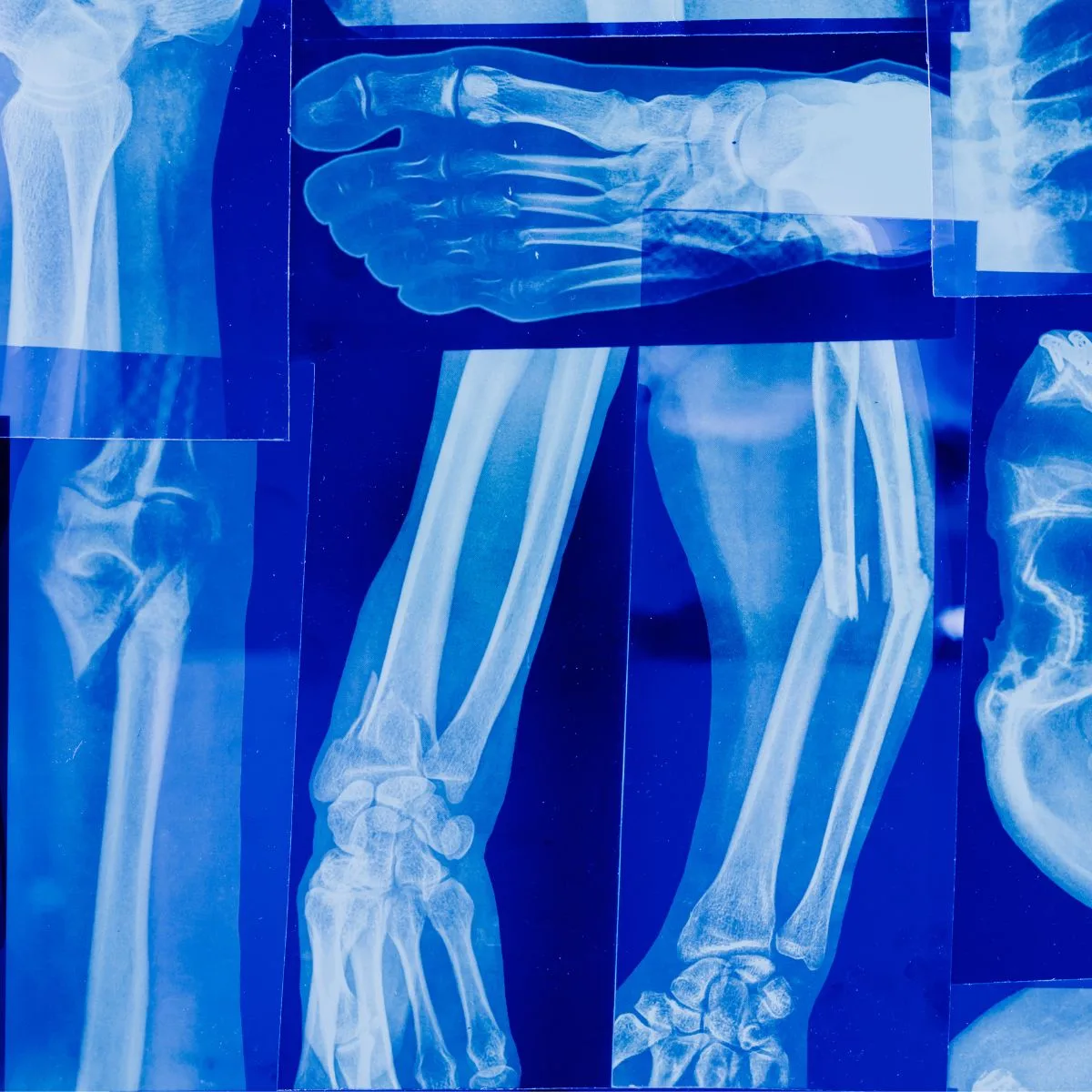
You rolled your ankle on an icy sidewalk, fell on an outstretched hand, or jammed your foot during a game. Now it is swollen and sore, and you are wondering: is it sprained or broken, and do I need an X-ray? Nobody can answer that reliably by looking or feeling at home. This guide explains how clinicians decide, which warning signs mean you should go to urgent care instead, and how to get an ankle, wrist, hand or foot X-ray in Toronto at Annex Medical Imaging once your provider has ordered one.
The Short Answer
Sprains and fractures can feel almost identical, and an X-ray is the standard way to check for a broken bone. Not every sore ankle or wrist needs one, so a doctor or other eligible provider decides after examining you. If you are sent for an X-ray, Annex Medical Imaging performs digital X-rays of the upper and lower extremities, and almost always accepts walk-in X-ray patients with a requisition. Call (416) 531-1128 with questions.
Sprain or Fracture? Why You Cannot Tell at Home
A sprain is an injury to ligaments, the tough bands that hold joints together. A fracture is a break in the bone. Both can cause pain, swelling and bruising, and both can make it hard to put weight on the limb. Some small fractures hurt less than a bad sprain, and some sprains hurt more than a small fracture. That is why a physical exam, and sometimes an X-ray, is needed.
How Clinicians Decide Whether You Need an X-Ray
For ankle and foot injuries, many clinicians use a well-known decision tool called the Ottawa Ankle Rules, which was developed by Canadian researchers. In simple terms, an X-ray is generally considered when there is pain in the ankle or midfoot together with one of the following:
- Tenderness when pressing on certain bony spots, such as the back edge or tip of the ankle bones, the navicular bone in the midfoot, or the base of the fifth metatarsal on the outer edge of the foot
- Being unable to take four steps, both right after the injury and when you are examined
These rules are a tool for trained professionals, not a home test. They do not apply to every situation, and your provider also considers your age, how the injury happened and what they find on examination. If you have been told you do not need an X-ray, that is a good-news result, not a missed diagnosis. If you are not improving after a few days, go back and ask to be reassessed.
When to Go to Urgent Care or the Emergency Department Instead
A walk-in imaging clinic is the right place for an X-ray that has already been ordered. It is not a replacement for emergency care. Seek urgent or emergency care if you have:
- A limb that looks bent, twisted or out of place
- Severe pain or rapidly increasing swelling
- Numbness, tingling, or a pale, cold or bluish hand or foot
- A bone poking through the skin, or an open wound
- Inability to move the injured area at all
How to Get an X-Ray After an Injury: Step by Step
- Get examined. See your family doctor, a walk-in clinic or urgent care. If an X-ray is needed, they will give you a requisition naming the body part.
- Check the requisition. It should name the exam, such as ankle, foot, wrist or hand. If you are unsure which view is needed, the technologist will take the right views for the requisition.
- Bring your requisition and Ontario health card to Annex. Annex accepts requisitions from physicians, chiropractors, midwives and nurse practitioners for the exams they are allowed to request. You can also email a PDF to reception@annexmedicalimaging.com or fax it to 416-531-1127.
- Get your X-ray. Annex almost always accepts walk-in X-rays, but you can call ahead to check the wait.
- Follow up. The radiologist’s report goes to the doctor who ordered the X-ray, who will explain the result and next steps.
What to Expect During an Ankle, Wrist, Hand or Foot X-Ray
- You will be asked to remove jewelry and metal items from the area, and to wear clothing without metal fasteners.
- The technologist positions the injured area on or near the X-ray detector. Several views from different angles are usually taken.
- You may be asked to hold very still for a moment while each image is captured. Gentle positioning is used if the area is painful, but tell the technologist if you are uncomfortable.
- Tell the technologist if you are or might be pregnant, and about any implants such as metal plates or screws.
A standard X-ray needs no fasting or special preparation. To learn more about safety, see our guide to X-ray radiation and safety.
Other Reasons Your Doctor May Order a Hand, Wrist, Ankle or Foot X-Ray
X-rays are not only for fresh injuries. According to the Annex X-ray page, extremity X-rays can also help find sports injuries, joint swelling from arthritis, weakened bones and other abnormalities that may be causing pain. They may also be used to monitor healing after a fracture or surgery. For larger joints, read our guide to shoulder, knee and hip X-rays.
Where to Go in Toronto
Annex Medical Imaging is at 800 Bathurst St, Unit 304 (3rd floor), directly across from Bathurst subway station. Hours are Monday to Friday 9:00 am to 5:00 pm and Saturday 9:00 am to 3:00 pm. Parking is not free in the building, but a paid lot is on Markham Street just behind it, and the TTC is usually the easier option. Most exams are covered by OHIP with a valid health card and a requisition.
Related Reading
- Bone X-Ray
- Comprehensive Guide to X-Ray Services in Toronto
- Same-Day Diagnostic Imaging in Toronto: How Walk-In Scans Save You Time
- Musculoskeletal ultrasound and preparation
- Do You Need a Referral for an X-Ray, Ultrasound, or Mammogram in Toronto?
Frequently Asked Questions
Can I walk in for an ankle or wrist X-ray without a requisition?
No. Annex cannot perform exams without a requisition. If you do not have one, you can ask a family doctor or a walk-in clinic to assess you and provide one if an X-ray is appropriate.
Will an X-ray show a sprain?
An X-ray shows bones, so it is used mainly to look for fractures and joint problems. Ligament injuries are not shown well on a standard X-ray. If your provider needs to look at ligaments, tendons or muscles, they may consider other tests such as musculoskeletal ultrasound.
Do I need to take off my jewelry?
Yes, remove metal items such as rings, bracelets and watches from the area being imaged, since they can interfere with the image.
How soon will my doctor get the report?
Usually within 3 to 5 business days. If your physician requests an urgent report, it is faxed within 24 hours.
Can I bring someone with me?
Yes, you can usually bring a friend or family member for support, although they may be asked to wait in a designated area during the X-ray itself.
Key Takeaways
- You cannot reliably tell a sprain from a fracture at home, so get examined.
- Clinicians use decision rules to decide who needs an X-ray, so a normal result or no X-ray is not a missed diagnosis.
- Go to urgent care or emergency for deformity, severe pain, numbness or an open wound.
- Bring a requisition and your health card to Annex for a walk-in extremity X-ray.
Book Your X-Ray in Toronto
Already have a requisition for an ankle, wrist, hand or foot X-ray? Visit Annex Medical Imaging or call (416) 531-1128. Learn more about X-ray services at Annex Medical Imaging.
This article is for general information only and is not medical advice or a substitute for an examination. If you think you may have a serious injury, seek urgent or emergency care.
continue reading
Related Posts
How long do X-ray and ultrasound results take in Toronto? Learn who reads your images, when your doctor gets the report, and what to do while you wait.

How much radiation is in an X-ray? Plain-language answers on dose, safety and pregnancy from a walk-in X-ray clinic in Toronto.
A simple cheat sheet for ultrasound preparation in Toronto: who needs to fast, who needs a full bladder, and the rules for abdominal, pelvic and kidney scans.