
At a Glance
- Checks the liver, gallbladder, pancreas, spleen, kidneys, and major abdominal vessels
- Most abdominal ultrasounds require 6–8 hours of fasting beforehand
- Plain water is fine during your fasting window
- The scan itself is painless and takes 20–40 minutes
- Results are sent to your referring provider within 24–48 hours
If your doctor has ordered an abdominal ultrasound, the most common question we hear is simple: “Do I need to fast, and for how long?” It’s a fair question, since getting the timing wrong can mean showing up for your appointment only to be told the images won’t be clear enough to interpret properly. Here’s the abdominal ultrasound fasting guide you need before your appointment. Here’s everything to know before your appointment.
What an abdominal ultrasound checks
An abdominal ultrasound uses sound waves to examine soft-tissue organs in your abdomen, including the liver, gallbladder, pancreas, spleen, kidneys, and major abdominal blood vessels like the aorta. It’s commonly ordered to investigate abdominal pain, suspected gallstones, liver conditions (including fatty liver or abnormal liver enzyme results on blood work), kidney issues like stones or swelling, an enlarged spleen, or to follow up on abnormal blood work more generally. It’s a versatile, radiation-free test that can answer a surprisingly wide range of clinical questions in a single appointment.
Why Abdominal Ultrasound Fasting Matters
Eating triggers your gallbladder to contract and release bile into the intestine, which shrinks the gallbladder and makes it much harder to visualize clearly — a full, relaxed gallbladder is much easier to assess for stones or wall thickening. Food in your stomach and intestines can also create gas that interferes with sound wave transmission, making organs like the pancreas — which sits deep in the abdomen behind the stomach and bowel — significantly harder to see clearly.
General fasting guidelines
- Most abdominal ultrasounds require 6–8 hours of fasting beforehand (no food or drink other than plain water)
- You can typically still take essential medications with a small sip of water unless specifically told otherwise by your doctor
- Morning appointments are often the easiest option, since an overnight fast covers most or all of the requirement without much extra effort
- If your ultrasound also includes the pelvis, you may additionally be asked to arrive with a full bladder — always confirm your specific instructions when booking, since combining a fasting requirement with a full-bladder requirement takes some planning
- Chewing gum, smoking, and drinking coffee should generally also be avoided during your fasting window, since they can all stimulate gallbladder contraction or increase swallowed air
Because prep can vary depending on exactly which organs are being examined, it’s worth confirming instructions with our front desk when you schedule your appointment rather than assuming a one-size-fits-all rule.
What happens during the scan
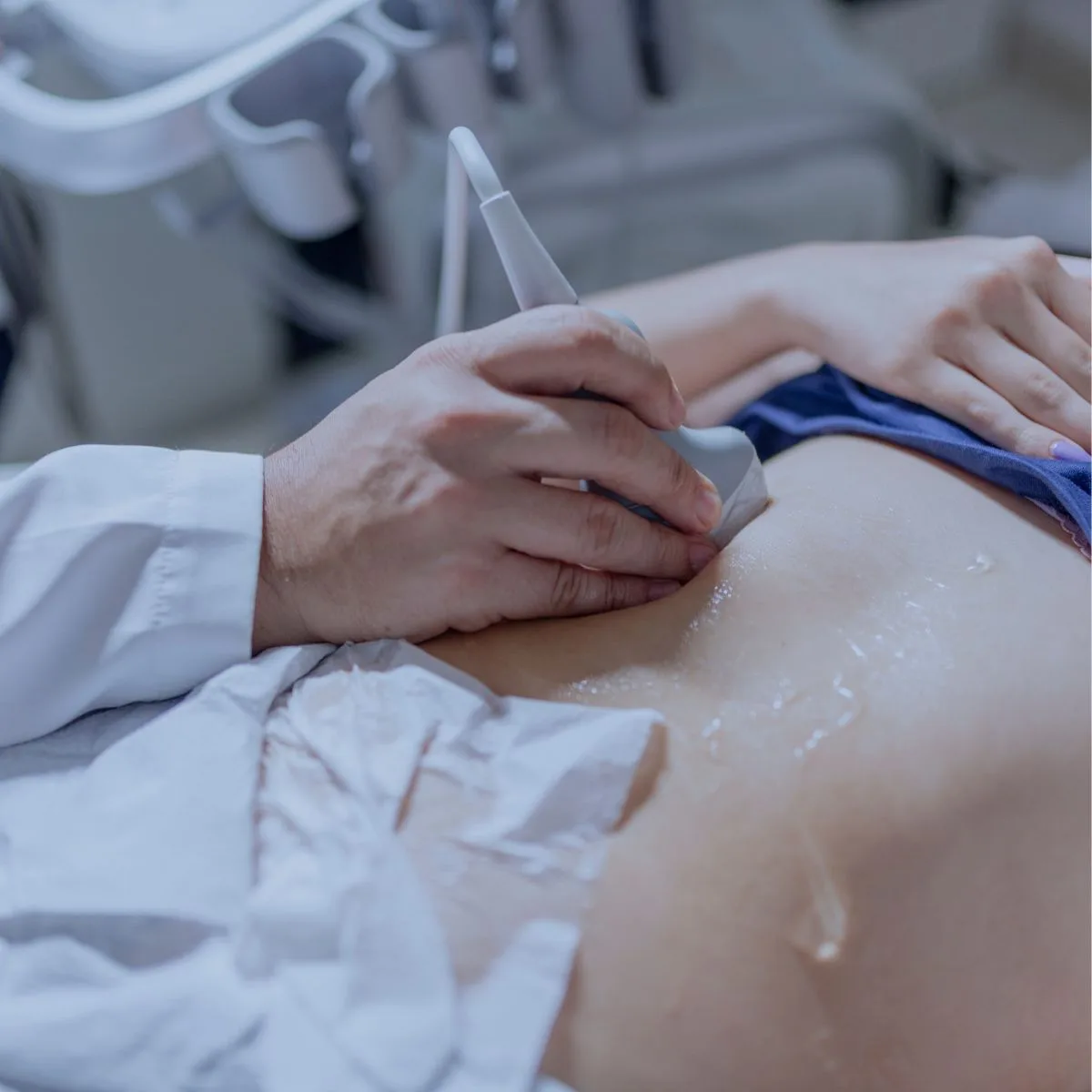
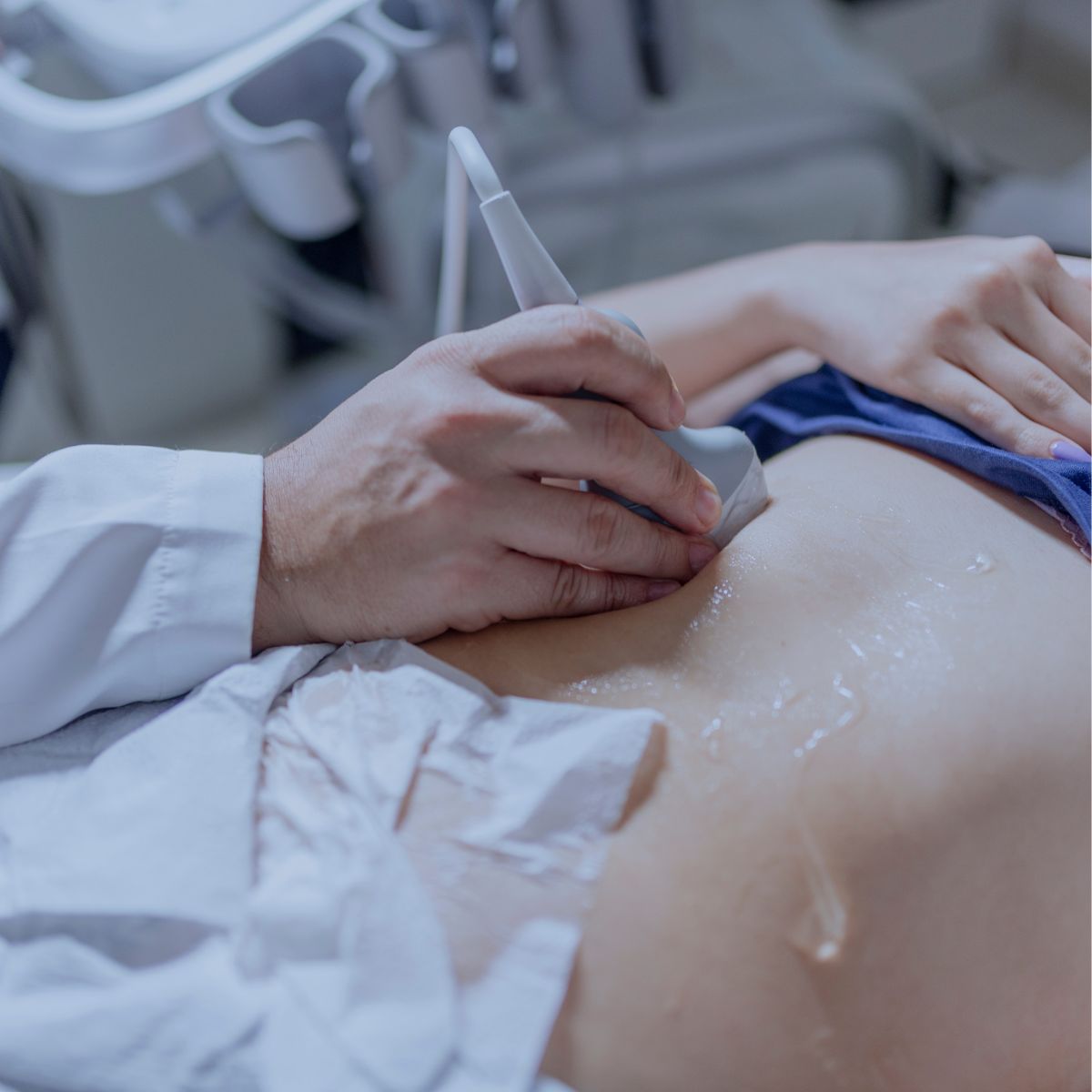
A certified sonographer applies a warmed gel to your abdomen and moves a probe across the area being examined, capturing images in real time on a monitor. The scan is entirely painless and generally takes 20–40 minutes, depending on how many organs are being assessed and how easy they are to visualize. You may be asked to hold your breath briefly at certain points — this helps move the liver and other organs into a better position for imaging, since breathing motion can blur the picture. You may also be repositioned onto your side at points during the exam.
What if you accidentally ate before your appointment?
If you forget and eat something before your scheduled fasting window ends, call ahead — depending on what and how much you ate, staff may be able to reschedule you for later the same day, or advise on whether the scan can still proceed with some limitations noted in the report.
Preparing children for an abdominal ultrasound
Fasting instructions for children are often shorter than for adults, since young kids can find longer fasts more difficult, and specific timing is usually based on their age. If your child has been referred for an abdominal ultrasound, it’s worth calling ahead so our team can walk you through age-appropriate prep and help you plan around nap times, school, or feeding schedules for infants.
What happens after the scan
Once your scan is complete, you’re free to eat and drink normally right away and resume all regular activities — there’s no recovery time needed and no after-effects from the ultrasound itself. Images are reviewed by a radiologist, who prepares a formal written report that’s sent to your referring provider, typically within 24–48 hours. If your doctor flagged the study as urgent, results are often communicated even faster.
Combining an abdominal ultrasound with other tests
Depending on what your doctor is investigating, an abdominal ultrasound is sometimes ordered alongside blood work, a pelvic ultrasound, or a follow-up X-ray. If you have multiple requisitions, it’s worth mentioning this when you book, since staff may be able to help coordinate fasting instructions that work for more than one exam in the same visit, saving you an extra trip.
A full, relaxed gallbladder is much easier to assess for stones or wall thickening — which is exactly why fasting matters.
Related Reading
- Obstetric Ultrasound in Toronto: What Happens at Your First, Anatomy & Growth Scans
- Vascular (Doppler) Ultrasound in Toronto: What It Detects, Who Needs One & How to Prepare
Frequently asked questions
Can I drink water while fasting for an abdominal ultrasound?
Yes, plain water is generally fine — it’s food, other beverages, and gum that should be avoided.
What if I have diabetes and can’t fast safely?
Let our team know when booking — your appointment can often be scheduled early in the day, and specific accommodations can be discussed with your doctor.
Does an abdominal ultrasound involve any radiation?
No — ultrasound uses sound waves only, with no radiation exposure at all.
How long does the appointment take from arrival to leaving?
Including check-in, most patients are in and out within 45–60 minutes, with the scan itself taking 20–40 minutes.
Will I get my results at the appointment?
No — results are reviewed by a radiologist and sent to your referring doctor, typically within 24–48 hours.
Can I take my regular medications the morning of the scan?
In most cases yes, with a small sip of water, but always confirm with your doctor or our front desk if you have specific concerns about a particular medication.
Additional resources on abdominal and liver health
- Canadian Liver Foundation — Information on liver health and liver disease
- Canadian Association of Radiologists – Patient Resources — Patient-focused explanations of ultrasound and other imaging exams
- Ontario Association of Radiologists – Patient Info — Information on what to expect for imaging exams in Ontario
Book your abdominal ultrasound
Annex Medical Imaging offers general abdominal ultrasound at our Toronto location, with appointments typically available within 1–2 business days and results sent to your referring provider within 24–48 hours.
continue reading
Related Posts

What is OBSP? A complete guide to Ontario's free breast cancer screening program — eligibility, self-referral, what to expect, and how results work.

Wondering when you should start getting mammograms in Ontario? Here's what changed with OBSP eligibility and when screening typically begins.

Find Annex Medical Imaging at 800 Bathurst St, a 1-minute walk from Bathurst Station. Directions, parking, and hours for your Toronto imaging appointment.