

At a Glance
- Most low-risk pregnancies involve a dating scan plus an 18–22 week anatomy scan
- Early scans often require a full bladder; later scans usually don’t
- The anatomy scan takes about 30–45 minutes
- A sonographer performs the scan; a radiologist formally reviews and reports
- Bring your requisition, health card, and two-piece clothing
Pregnancy comes with a lot of firsts, and your first obstetric ultrasound in Toronto is often one of the most anticipated — and, understandably, one of the most nerve-wracking. Depending on how your pregnancy progresses, you may have anywhere from one to several ultrasounds over nine months, and each one serves a different purpose. Knowing what to expect at each stage can make the whole experience feel a lot less uncertain.
The dating (first-trimester) ultrasound
Usually performed sometime in the first trimester, this scan confirms how far along you are by measuring the embryo or fetus, checks for a single heartbeat (or more than one, if you’re expecting twins or multiples), and confirms the pregnancy is developing inside the uterus rather than in a fallopian tube (an ectopic pregnancy). It’s often the first time you’ll hear your baby’s heartbeat, which can be an emotional milestone. For many patients, this scan requires a full bladder to get a clear image of the early uterus, so it’s worth asking our team about specific prep instructions when you book.
Depending on your dates and the clinical question your doctor is trying to answer, this scan may be done transabdominally (over the belly) or transvaginally (which often gives a clearer picture very early in pregnancy). Your sonographer will explain which approach is planned before you begin.
The 18–22 week anatomy scan
This is the most detailed scan of a typical pregnancy, and for many parents, it’s the one they remember most. The sonographer systematically examines the baby’s organs, spine, brain, heart, limbs, growth measurements, amniotic fluid level, and placental position in detail, checking that everything is developing as expected. Because there’s simply more to measure and document, it’s a longer appointment — often 30–45 minutes — and there may be moments where the sonographer needs to reposition you or ask you to move around to get a clearer view of a particular structure.
This scan can also often (though not always, and never guaranteed) reveal the baby’s sex if you’d like to know, and your sonographer can let you know local practice on how and whether that information is shared during the appointment itself.
Third-trimester growth scans
Not everyone needs one, but if your doctor is monitoring fetal growth, amniotic fluid levels, or placental position later in pregnancy — for example, due to gestational diabetes, concerns about growth restriction, or a low-lying placenta identified earlier — additional ultrasounds may be ordered in the third trimester. These are typically shorter, more focused studies rather than a full anatomy review, concentrating on the specific measurement or concern your doctor wants followed up.
Obstetric Ultrasound Preparation Tips
- Drink water beforehand if you were told to arrive with a full bladder (common for early scans, less so later in pregnancy)
- Wear two-piece clothing so your abdomen is easy to access without fully undressing
- Bring your requisition and health card
- Bring a support person if you’d like — ask at check-in about our current policy
- Try to arrive a few minutes early, since paperwork and check-in take a little longer for obstetric visits
Is Obstetric Ultrasound Covered by OHIP in Toronto?
Medically necessary obstetric ultrasounds ordered by your physician or midwife are generally covered under OHIP. Elective scans purely for keepsake images or gender-reveal purposes are a different category and aren’t something a diagnostic imaging clinic like ours provides — our ultrasounds are performed for medical assessment by certified sonographers and formally reviewed by a radiologist, which is a different service model from a boutique 3D/4D ultrasound studio.
What if something needs a closer look?
If your sonographer or radiologist identifies something that needs further assessment — for example, a measurement that’s outside the expected range — your referring provider will be notified so they can discuss next steps with you, which may include a repeat scan, additional testing, or a referral to a maternal-fetal medicine specialist. It’s normal for this to feel worrying, but many follow-up findings turn out to be within a normal range of variation once reassessed.
Bringing a list of questions to your scan
Many patients find it helpful to write down questions ahead of time — whether that’s about your due date, a symptom you’ve been experiencing, or simply what the images show. While your sonographer performs the scan and can point out structures like the heartbeat or limbs as they’re visible, detailed interpretation and clinical advice come from your referring physician or midwife once they’ve reviewed the radiologist’s report, so it helps to save more involved medical questions for that follow-up appointment.
What if you’re expecting twins or multiples?
A multiple pregnancy generally means more frequent ultrasounds than a singleton pregnancy, since your care team will want to monitor each baby’s individual growth, as well as shared structures like the placenta and amniotic sacs, more closely. Your doctor or midwife will let you know the specific monitoring schedule they recommend based on your situation.
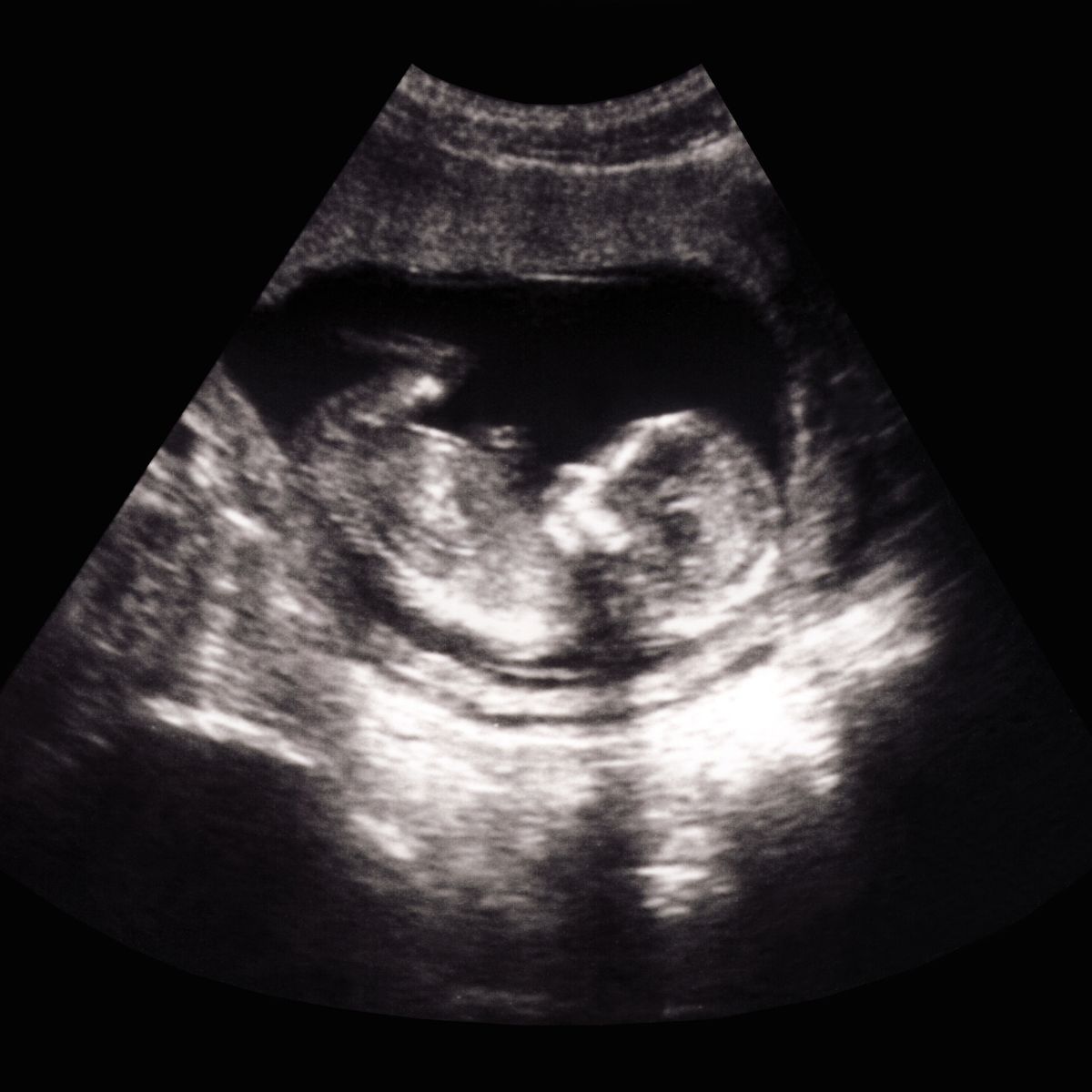
It’s often the first time you’ll hear your baby’s heartbeat, which can be an emotional milestone.
Related Reading
- General Abdominal Ultrasound: What It Checks and How to Prepare (Fasting Guide)
- Ultrasound vs. X-Ray vs. Mammogram: Which Imaging Test Do You Actually Need?
Frequently asked questions
How many ultrasounds will I have during a normal pregnancy?
Most low-risk pregnancies involve at least a dating scan and an 18–22 week anatomy scan, with additional scans added if your doctor identifies something to monitor.
Do I need a full bladder for every ultrasound?
No — this is mainly required for early scans; later in pregnancy, the growing uterus makes a full bladder unnecessary.
Can my partner or another support person come in with me?
In most cases, yes — ask our front desk about current policies when you book.
Will I find out my baby’s sex?
It’s often visible at the anatomy scan if the baby is positioned well, though it’s never guaranteed and depends on your preferences and your provider’s practice.
Who reviews my ultrasound images?
A certified sonographer performs the scan, and a radiologist formally reviews and reports on the images before they’re sent to your referring provider.
What should I do if I’m feeling anxious before my scan?
It’s completely normal to feel nervous, especially before your first ultrasound — let the sonographer know, as they’re used to helping patients feel more at ease throughout the appointment.
Can I eat before an obstetric ultrasound?
Yes, in most cases no fasting is required for pregnancy ultrasounds — the main preparation is usually a full bladder for early scans, not fasting.
Additional resources from Ontario Health
For more on prenatal screening options and pregnancy care in Ontario, these official resources go into further detail:
- Prenatal Screening Ontario — Ontario’s program overseeing genetic prenatal screening options
- BORN Ontario — Ontario Health’s provincial perinatal and newborn registry and program lead
- Pregnancy Info — patient-facing pregnancy and prenatal testing information from the Society of Obstetricians and Gynaecologists of Canada
Book with confidence
Annex Medical Imaging offers general, obstetric, and vascular ultrasound at our Bathurst and Bloor location, with most appointments available within 1–2 business days. Bring your requisition and we’ll take care of the rest.
continue reading
Related Posts

What is OBSP? A complete guide to Ontario's free breast cancer screening program — eligibility, self-referral, what to expect, and how results work.

Wondering when you should start getting mammograms in Ontario? Here's what changed with OBSP eligibility and when screening typically begins.

Find Annex Medical Imaging at 800 Bathurst St, a 1-minute walk from Bathurst Station. Directions, parking, and hours for your Toronto imaging appointment.