

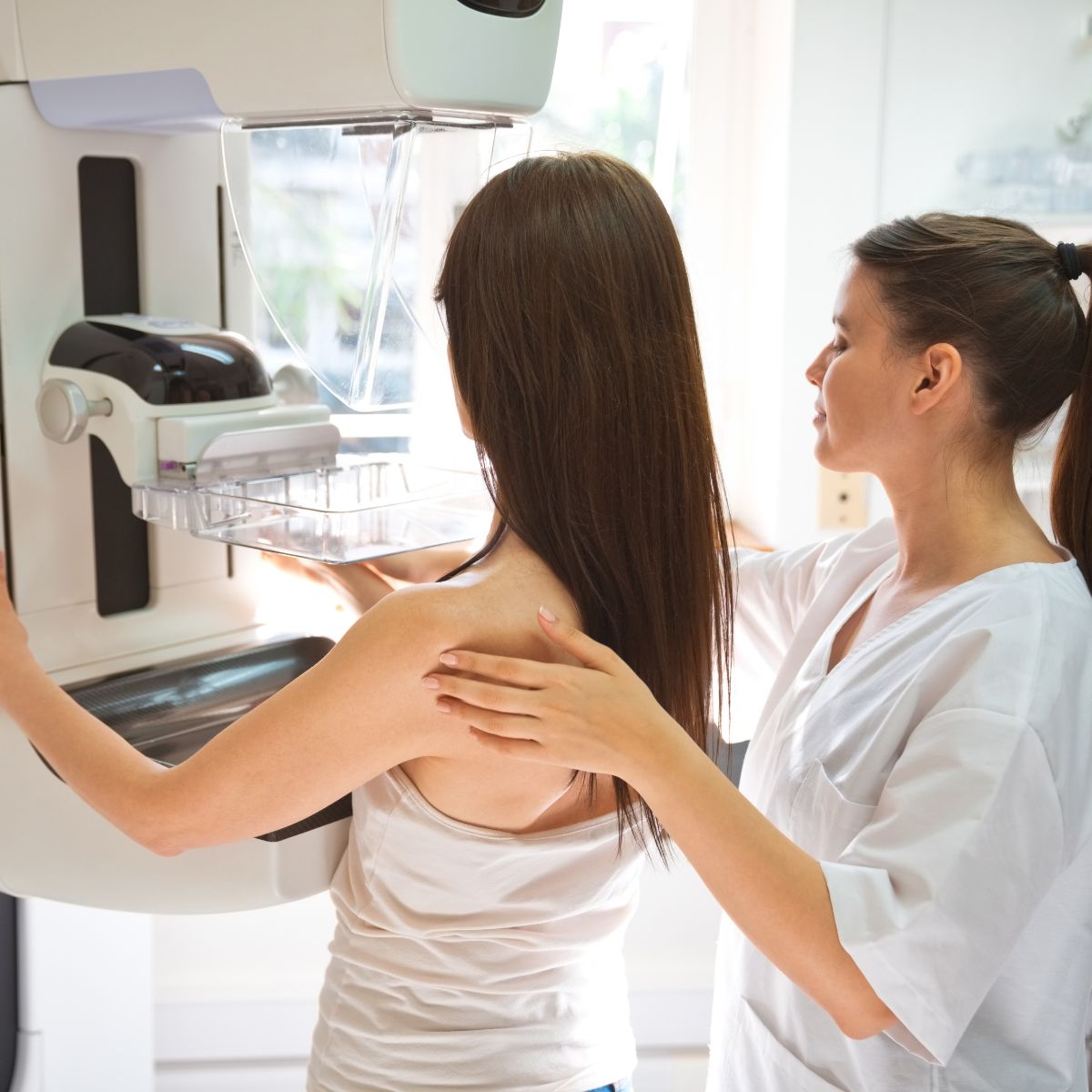
At a Glance
- Self-referral age was lowered from 50 to 40 as of October 2024
- Ages 40–74 at average risk can self-refer every 2 years — no doctor’s referral needed
- Ages 30–69 at high risk can qualify for annual mammogram + MRI with a referral
- Screening mammograms through OBSP are free for eligible Ontarians
- 75+ continues based on a conversation with your primary care provider
“When should I get my first mammogram in Ontario?” is one of the most common questions we hear at the front desk — and the answer recently changed in a way many Ontarians don’t yet know about. If you’ve been putting off asking because you assumed you weren’t eligible yet, it’s worth a second look, since the rules shifted meaningfully in the last couple of years.
First Mammogram in Ontario: The Eligibility Age Was Recently Lowered
As of October 2024, the Ontario Breast Screening Program (OBSP) lowered its self-referral age from 50 to 40. That means women aged 40 and older can now book a publicly funded screening mammogram directly, without needing a doctor’s referral, once every two years — a significant change from the previous system, where average-risk screening didn’t typically begin until age 50.
What this means for you, by age group
- Ages 40–74, average risk: Eligible to self-refer for a free screening mammogram every 2 years through OBSP, with no referral required
- Ages 30–69, high risk (based on strong family history, a known genetic mutation like BRCA1/2, or previous chest radiation): Eligible for annual screening with both mammography and MRI, with a doctor’s referral required
- Age 75+: Screening can continue, but it’s based on a conversation with your primary care provider, since the program doesn’t automatically recall patients in this age group the way it does for younger age brackets
Why the change matters
Earlier screening access is intended to catch breast cancer sooner, when treatment tends to be more effective and less invasive — and to help reduce disparities affecting groups of women who are statistically diagnosed with more aggressive cancers at a younger age. Lowering the self-referral age also removes a step (getting a doctor’s referral) that could otherwise delay someone from being screened, particularly for patients without a regular family physician.
Do you need a referral?
If you’re 40 or older and at average risk, no — you can self-refer directly to an OBSP site like Annex Medical Imaging. If you’re in the high-risk category, or if your doctor wants a diagnostic (not screening) mammogram to investigate a specific symptom like a lump or change, a referral is required regardless of your age.
What counts as “average risk” versus “high risk”?
Average risk generally describes someone with no personal history of breast cancer, no known genetic mutation, and no strong family history. High risk generally applies to people with a first-degree relative (parent, sibling, or child) diagnosed with breast cancer at a young age, multiple affected relatives, a known BRCA1/2 or other genetic mutation, or a history of chest radiation therapy, often for a prior cancer treatment. If you’re unsure which category you fall into, it’s worth discussing your family history with your doctor, since it affects both your starting age and how often you should be screened.
What if you’ve never had a mammogram before?
There’s no need to feel behind or embarrassed — many people delay their first screening for all sorts of reasons, from lack of awareness of the eligibility change to simple scheduling difficulty. The process for a first-time mammogram is the same regardless of when you start: self-refer if you’re 40+ and average risk, or get a referral if you fall into the high-risk category.
Breast awareness between screenings
Screening mammograms are performed on a set schedule (every two years for average risk), but that doesn’t mean paying attention to your breast health should wait until your next appointment. Being generally familiar with how your breasts normally look and feel makes it easier to notice a genuine change — like a new lump, dimpling, or nipple discharge — between scheduled screenings. If you notice something like this, it’s worth seeing your doctor promptly rather than waiting for your next scheduled OBSP appointment, since a new symptom calls for a diagnostic mammogram rather than routine screening.
What if you have dense breast tissue?
Some patients are told they have “dense” breast tissue after a mammogram, which simply describes the composition of breast tissue on imaging and is a common, normal finding — though dense tissue can make mammograms somewhat harder to interpret. If this applies to you, your doctor may discuss whether supplementary imaging, like ultrasound, makes sense as part of your individual screening plan going forward.
If you’ve been putting off asking because you assumed you weren’t eligible yet, it’s worth a second look.
Related Reading
- Mammograms in your 40s in Toronto: should you start?
- Who can get an OBSP mammogram in Toronto: eligibility for ages 40 to 74
- Reduce your breast cancer risk with My CancerIQ
- What to expect at your mammogram in Toronto, step by step
Frequently asked questions
Do I need symptoms to qualify for a screening mammogram?
No — screening mammograms through OBSP are specifically for people without symptoms; if you have a specific concern like a lump, you’ll need a diagnostic mammogram with a referral instead.
What if I’m 39 and worried about my risk?
Speak with your doctor about your specific family history and risk factors — high-risk screening can begin as early as age 30 with a referral.
Is the screening mammogram free?
Yes, OBSP screening mammograms are publicly funded for eligible Ontarians.
Can I switch from a family doctor referral to self-referral?
If you’re 40+ and average risk, you can simply self-refer directly going forward — no need to keep routing through your family doctor for routine screening.
What happens after age 74?
The program doesn’t automatically recall patients past 74, so continuing screening becomes a personal decision made together with your primary care provider.
Does having dense breasts change when I should start screening?
Dense breast tissue doesn’t change the recommended starting age, though it may factor into conversations with your doctor about whether additional imaging makes sense for you.
Additional resources from Ontario Health
For more on eligibility, guidelines, and wait times, these official Ontario Health resources go into further detail:
- Breast Cancer Screening and Prevention — Government of Ontario’s overview of OBSP eligibility and self-referral
- Ontario Health – Cancer Screening Programs — provincial overview of cancer screening services, including OBSP
- Breast Cancer Canada – Screening Guidelines — national age- and risk-based screening guidelines
- Canadian Cancer Society – Breast Cancer Risk Factors — understanding risk factors and high-risk screening eligibility
- OBSP Wait Times Tool — check current screening wait times by location across Ontario
Next steps
If you’re 40 or older and haven’t had a mammogram in the last two years, you’re likely eligible right now. For the full picture of how OBSP works — including what happens during your appointment and how results are communicated — see our complete guide to the Ontario Breast Screening Program. Annex Medical Imaging performs digital mammography for both OBSP screening and diagnostic follow-up at our Toronto location.
continue reading
Related Posts

What is OBSP? A complete guide to Ontario's free breast cancer screening program — eligibility, self-referral, what to expect, and how results work.

Find Annex Medical Imaging at 800 Bathurst St, a 1-minute walk from Bathurst Station. Directions, parking, and hours for your Toronto imaging appointment.
Joint pain? Here's when doctors typically order a shoulder, knee, or hip X-ray, and what to expect during the scan in Toronto.