

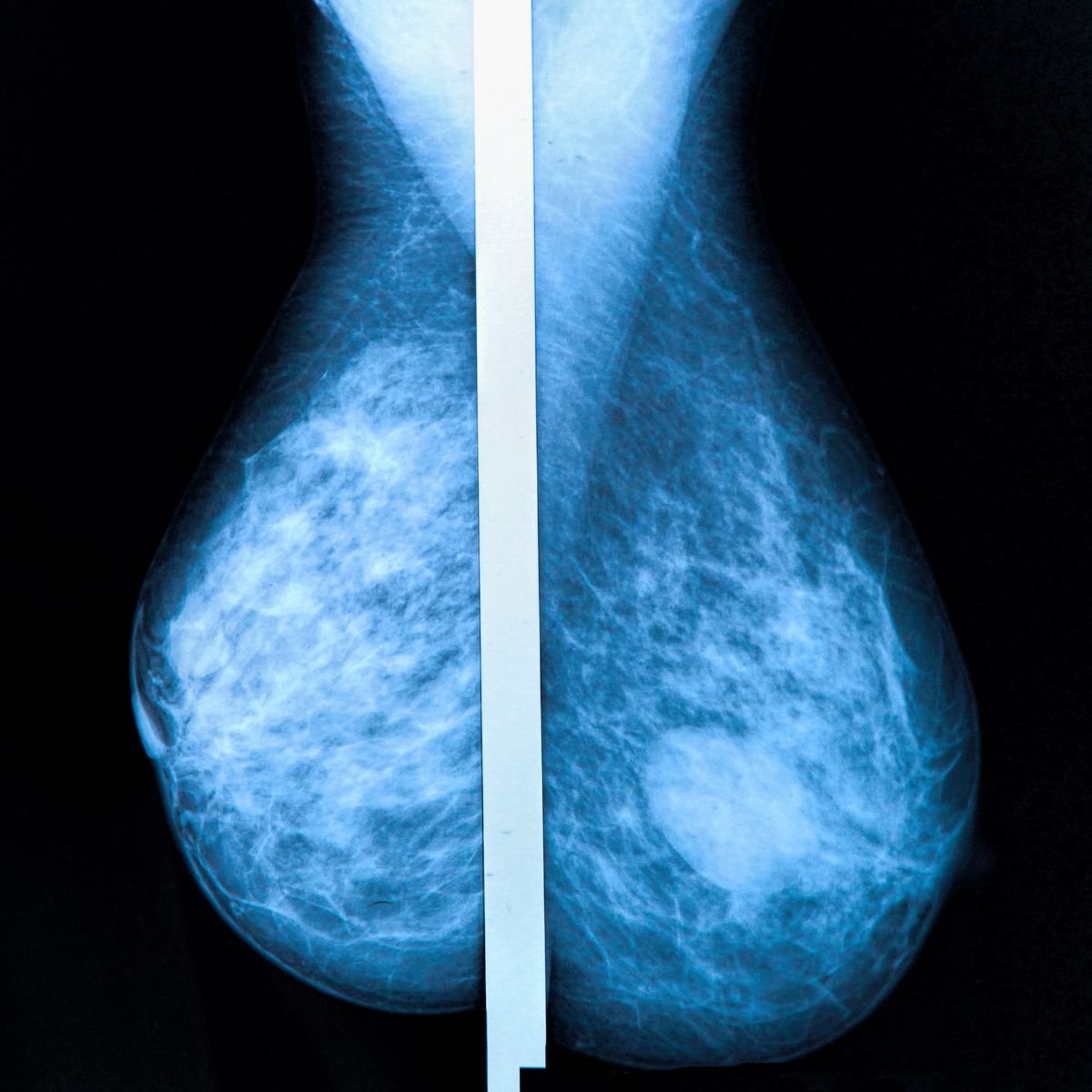
At a Glance
- OBSP provides free screening mammograms to eligible Ontarians at designated sites
- Ages 40–74 at average risk can self-refer directly — no referral required
- The appointment, including check-in, typically takes 20–30 minutes
- Results are mailed to you and sent to your primary care provider within a few weeks
- Being called back for more imaging is common and doesn’t automatically mean cancer
What is OBSP? If your doctor, a friend, or a poster in a clinic waiting room has mentioned “OBSP,” here’s everything it actually means for you — from who qualifies, to how self-referral works, to what actually happens during your appointment and how you’ll hear back about your results. (If you want general mammogram preparation tips that apply beyond OBSP, see our mammography and preparation guide.)
What Is OBSP?
So, what is OBSP? The Ontario Breast Screening Program (OBSP) is a province-wide program, coordinated through Ontario Health (Cancer Care Ontario), that provides free screening mammograms to eligible Ontarians at designated sites, including Annex Medical Imaging. It’s specifically designed for screening — checking for early signs of breast cancer in people without any current symptoms — rather than investigating a specific existing concern, which falls under diagnostic imaging instead.
Who’s eligible
- Average risk: Women and other eligible individuals aged 40–74 can self-refer for a screening mammogram every 2 years, with no doctor’s referral required (as of the October 2024 policy change that lowered the starting age from 50 to 40)
- High risk: Ages 30–69 with a strong family history, a known genetic mutation (like BRCA1/2), or previous chest radiation may qualify for annual screening with both mammography and MRI, with a physician referral required
- 75 and older: Screening can continue, but isn’t automatically scheduled the way it is for younger age groups — this becomes a decision to make together with your primary care provider based on overall health and preferences
How self-referral actually works
If you’re 40 or older and at average risk, you can contact an OBSP site directly, like Annex Medical Imaging, to book your screening mammogram — no requisition needed from your doctor. When you call or visit to book, you’ll be asked a few basic eligibility screening questions covering your age, whether you have any current breast symptoms, your prior screening history, and any personal or family history of breast cancer. This helps determine whether a screening mammogram is the right test for you, or whether you should see your doctor first for a diagnostic workup instead.
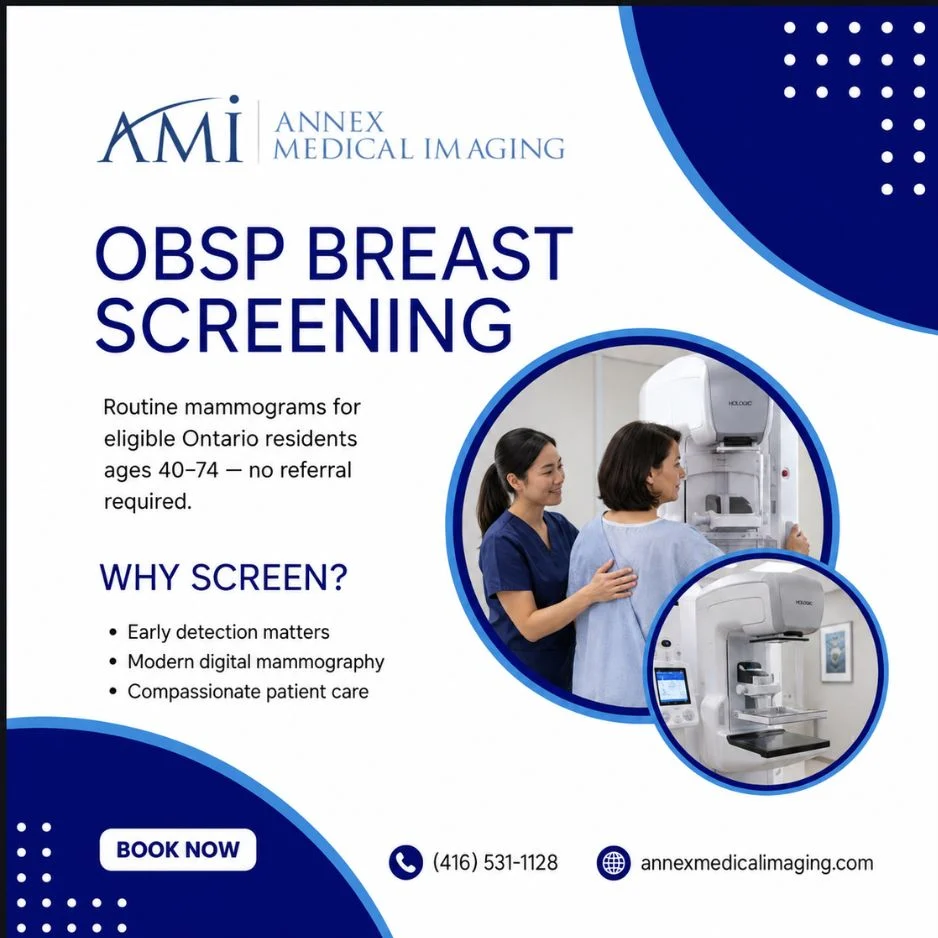
What happens at your appointment, step by step
A certified mammography technologist will position each breast between two plates for a brief compression, capturing multiple views from different angles to give the radiologist a complete picture. The compression can feel uncomfortable, and sometimes momentarily painful, for a few seconds, but it’s a necessary part of getting a clear image and shouldn’t cause lasting discomfort. The entire appointment, including check-in and paperwork, typically takes about 20–30 minutes, with the actual imaging portion taking only a few minutes. Our clinic uses digital mammography equipment, which allows for clearer imaging at a lower radiation dose compared to older film-based systems.
It’s worth scheduling your mammogram when you’re not expecting your period, if possible, since breast tissue tends to be less tender at other points in your cycle — though this isn’t a strict requirement, and staff can still perform the exam at any time if needed.
How results work
Unlike our other exams, OBSP has a structured follow-up process built into the program itself: results are mailed directly to you as well as sent to your primary care provider, typically within a few weeks. If anything on your mammogram requires a closer look — which is common and doesn’t necessarily mean cancer is present — OBSP coordinates the follow-up diagnostic imaging for you rather than leaving you to arrange additional appointments and referrals on your own, which meaningfully reduces the administrative burden during an already stressful time.

Screening mammogram vs. diagnostic mammogram
A screening mammogram (through OBSP) is for people without symptoms, taken purely as a preventive check on a regular schedule. A diagnostic mammogram is ordered specifically when there’s a concern — a lump, pain, nipple discharge, skin changes, or a follow-up on an abnormal screening result — and requires a doctor’s referral regardless of your age or how recently you were last screened. Diagnostic mammograms often involve additional views or supplementary imaging like ultrasound at the same visit, since the goal is to answer a specific clinical question rather than simply screen broadly.
What if you’re called back after a screening mammogram?
Being called back for additional imaging after a screening mammogram is common and doesn’t automatically mean something serious was found — many callbacks are resolved with a simple additional view or ultrasound that shows normal tissue. Still, it’s understandably an anxious wait for many people, and OBSP’s coordinated follow-up process is designed specifically to move you through that process as efficiently as possible.
OBSP coordinates the follow-up diagnostic imaging for you rather than leaving you to arrange additional appointments and referrals on your own.
Related Reading
- Who can get an OBSP mammogram in Toronto: eligibility for ages 40 to 74
- Mammograms in your 40s in Toronto: should you start?
- What to expect at your mammogram in Toronto, step by step
- Breast and chest screening for Two-Spirit, trans and nonbinary people in Toronto
Frequently asked questions
Is OBSP screening really free?
Yes — screening mammograms through OBSP are publicly funded for all eligible Ontarians, with no out-of-pocket cost.
Do I need my health card to book an OBSP appointment?
Yes, your OHIP card is used to confirm eligibility and coverage when you book.
How will I get my results?
OBSP mails results directly to you and also sends them to your primary care provider, typically within a few weeks.
What if I don’t have a family doctor?
You can still self-refer for OBSP screening if you’re 40+ and average risk — a family doctor isn’t required for the screening mammogram itself, though having one is helpful for any necessary follow-up care.
Can men be screened through OBSP?
OBSP is designed around breast cancer screening guidelines for women; men with specific concerns or risk factors should speak with their doctor about a diagnostic mammogram referral instead.
What should I bring to my OBSP appointment?
Bring your OHIP card and, if you have one, any prior mammogram records or the name of the facility where you were last screened, since this can help with comparison imaging.
Additional resources from Ontario Health
For more on eligibility, guidelines, and wait times, these official Ontario Health resources go into further detail:
- Breast Cancer Screening and Prevention — Government of Ontario’s overview of OBSP eligibility and self-referral
- Ontario Health – Cancer Screening Programs — provincial overview of cancer screening services, including OBSP
- Breast Cancer Canada – Screening Guidelines — national age- and risk-based screening guidelines
- Canadian Cancer Society – Breast Cancer Risk Factors — understanding risk factors and high-risk screening eligibility
- OBSP Wait Times Tool — check current screening wait times by location across Ontario
Book your OBSP screening
If you’re 40 or older, haven’t been screened in the last two years, and have no current breast symptoms, you can self-refer directly to Annex Medical Imaging for your OBSP mammogram — no appointment-booking hurdles, no referral required.
continue reading
Related Posts

Wondering when you should start getting mammograms in Ontario? Here's what changed with OBSP eligibility and when screening typically begins.
-
Find Annex Medical Imaging at 800 Bathurst St, a 1-minute walk from Bathurst Station. Directions, parking, and hours for your Toronto imaging appointment.
Joint pain? Here's when doctors typically order a shoulder, knee, or hip X-ray, and what to expect during the scan in Toronto.